
Can I Change a Light Fitting Myself in the UK?
A new light fitting can change the feel of a room in an afternoon, so it's no surprise that "can I change a light fitting myself in the UK?" is such a common question. The short answer for England is that swapping an existing fitting for a similar one is usually allowed as DIY, but only if you're competent and do it safely. Electricity is unforgiving of guesswork, so in this guide we explain what the rules say, what a safe swap involves, and when the job belongs to a qualified electrician.
What the rules say
Electrical work in homes in England is covered by Part P of the Building Regulations. Some work is notifiable, meaning it must be done by a registered electrician or signed off by building control. That includes things like adding a new circuit, replacing a consumer unit, and some work in bathrooms. You can read the official guidance in Approved Document P on GOV.UK.
Replacing an existing light fitting with a similar one is generally treated as a like-for-like replacement and is not notifiable. But "not notifiable" doesn't mean "anything goes". The work must still be done safely and to the wiring regulations. Turning one ceiling light into a run of new downlights, for example, is an alteration rather than a replacement, and that's a different matter.
These rules are for England. Wales has its own version of Part P, and Scotland's building standards work differently, so check the rules where you live.
Can I change a light fitting myself? A quick guide
| Job | DIY? |
|---|---|
| Swapping a ceiling pendant or shade for a similar fitting | Usually yes, if you're competent |
| Changing a light bulb or lampshade | Yes |
| Replacing a fitting with one that needs an earth, where there's no earth wire | No, call an electrician |
| Adding new lights, downlights or a new switch position | Call an electrician |
| Anything in a bathroom near the bath or shower | Best left to an electrician |
| Any work on the consumer unit (fuse box) | Always an electrician |
| Old or damaged wiring, scorch marks, or rubber-insulated cables | Stop and call an electrician |
How to swap a light fitting safely
If you're confident and the job is a straightforward like-for-like swap, this is the safe order of work. If any step doesn't match what you find, stop.
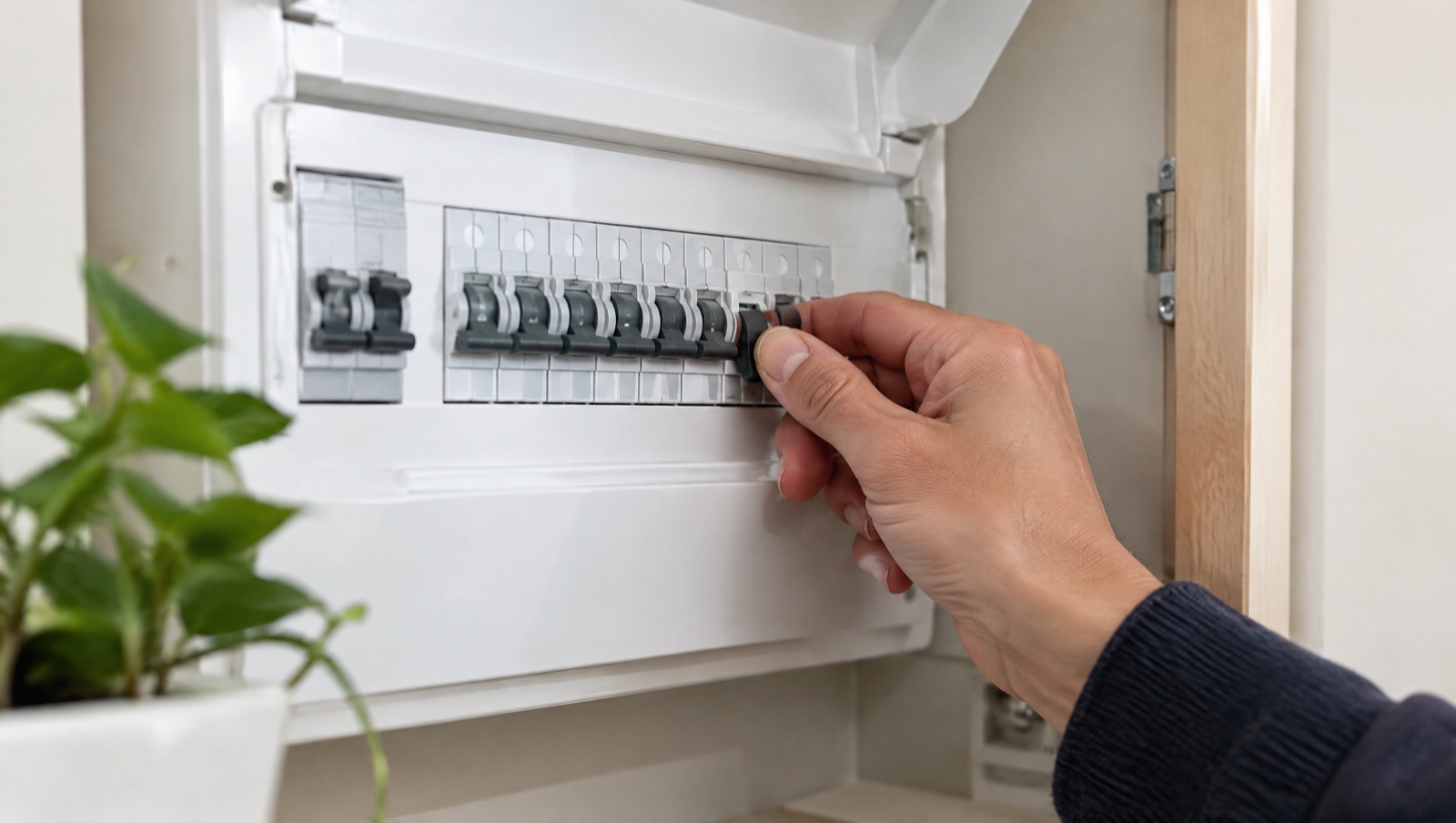
- Turn off the lighting circuit at the consumer unit, not just at the wall switch. A switched-off light can still have live wires at the ceiling.
- Stop it being switched back on. Tell everyone in the house, and use a breaker lock if you have one.
- Prove the circuit is dead with a proper voltage tester before you touch anything. Test the tester on a known live source first.
- Take a photo of the existing wiring before disconnecting anything. Ceiling roses often have several cables, and the photo is your reference.
- Check the new fitting's instructions. Metal fittings usually need an earth connection. If there's no earth wire at the ceiling, use a fitting marked as not needing one (double insulated), or get an electrician.
- Support the fitting's weight properly. Heavy fittings need a secure fixing into a joist or a suitable support, not just the ceiling rose.
- Connect, tidy and secure all conductors with no bare copper showing, then restore the power and test.
Bathrooms and outdoor lights
Bathrooms are treated as special locations because water and electricity are a dangerous mix. Light fittings near a bath or shower need the right IP (ingress protection) rating for their position, and the rules on what's notifiable are stricter. Outdoor lights also need fittings rated for the weather and often an RCD-protected supply. For either, we'd recommend an electrician.
Warning signs to stop and call an electrician
- Cables with crumbling rubber or fabric insulation, which is common in older homes
- Scorch marks, a burning smell, or melted plastic at the ceiling rose
- No earth wire where your new fitting needs one
- Lights that flicker, or a circuit breaker that trips repeatedly
- Wiring that doesn't match what you expected, or that you don't understand
Registered electricians can certify their work through government-approved competent person schemes. It's worth asking which scheme they belong to.
Renters: check first
If you rent, ask your landlord before changing fixed light fittings. Electrical wiring is the landlord's responsibility, and in England private landlords have to have the electrics inspected and tested at least every five years under the electrical safety standards for private rented homes.
Leave it to a pro
Want a new fitting up without the worry? Electrical additions like a new socket behind a wall-mounted TV need a qualified electrician too. See how much it costs to mount a TV, and our guide to choosing the right person for the job.
Book light installation on 100Handy with a local pro, and choose someone qualified for electrical work.
Need a hand with this?
Book a trusted 100 Handy Pro and get it done today — no hassle, no guesswork.
Book a Pro