How to Bleed a Radiator: A UK Step-by-Step Guide
If a radiator is cold at the top but warm at the bottom, or you can hear gurgling when the heating comes on, there's probably air trapped inside. Knowing how to bleed a radiator is one of the most useful bits of home maintenance you can learn: it takes about ten minutes, needs a cheap key and a cloth, and can make your rooms warmer straight away. Here's how to do it safely in a typical UK home.
Signs your radiators need bleeding
- The radiator is cold at the top and warm at the bottom.
- You hear gurgling, banging or trickling when the heating is on.
- Rooms take longer than usual to warm up.
If a radiator is cold at the bottom and warm at the top, that's usually sludge rather than air, and bleeding won't fix it. We'll cover that in a separate guide.
What you need
| Item | What it's for |
|---|---|
| Radiator bleed key | Opens the small valve at the top corner. Some valves take a flat-head screwdriver instead. |
| Old cloth or towel | Catches drips and protects the wall and floor |
| Small container | Useful if a valve spits more water than expected |
| Your boiler manual | Tells you the right pressure and how to top it up |
How to bleed a radiator, step by step
- Turn the heating on so all the radiators warm up. This pushes trapped air to the top.
- Find the cold radiators. Carefully feel along the top of each one (they can be hot) and note which have cold patches.
- Turn the heating off and let the radiators cool. Bleeding a hot radiator can release scalding water, so wait until it's safe to touch.
- Start with the radiator furthest from the boiler on the ground floor, then work towards the boiler and upstairs.
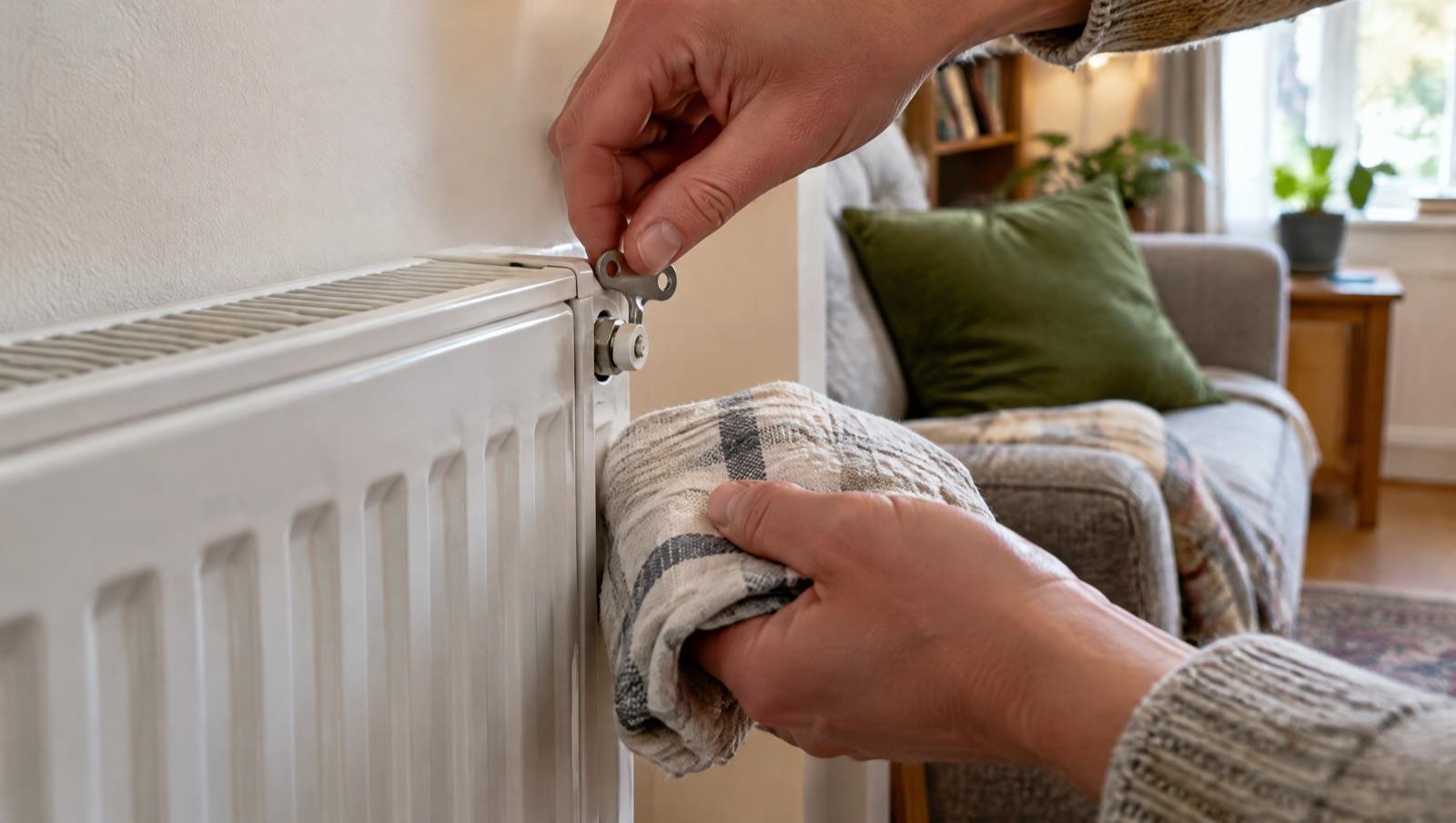
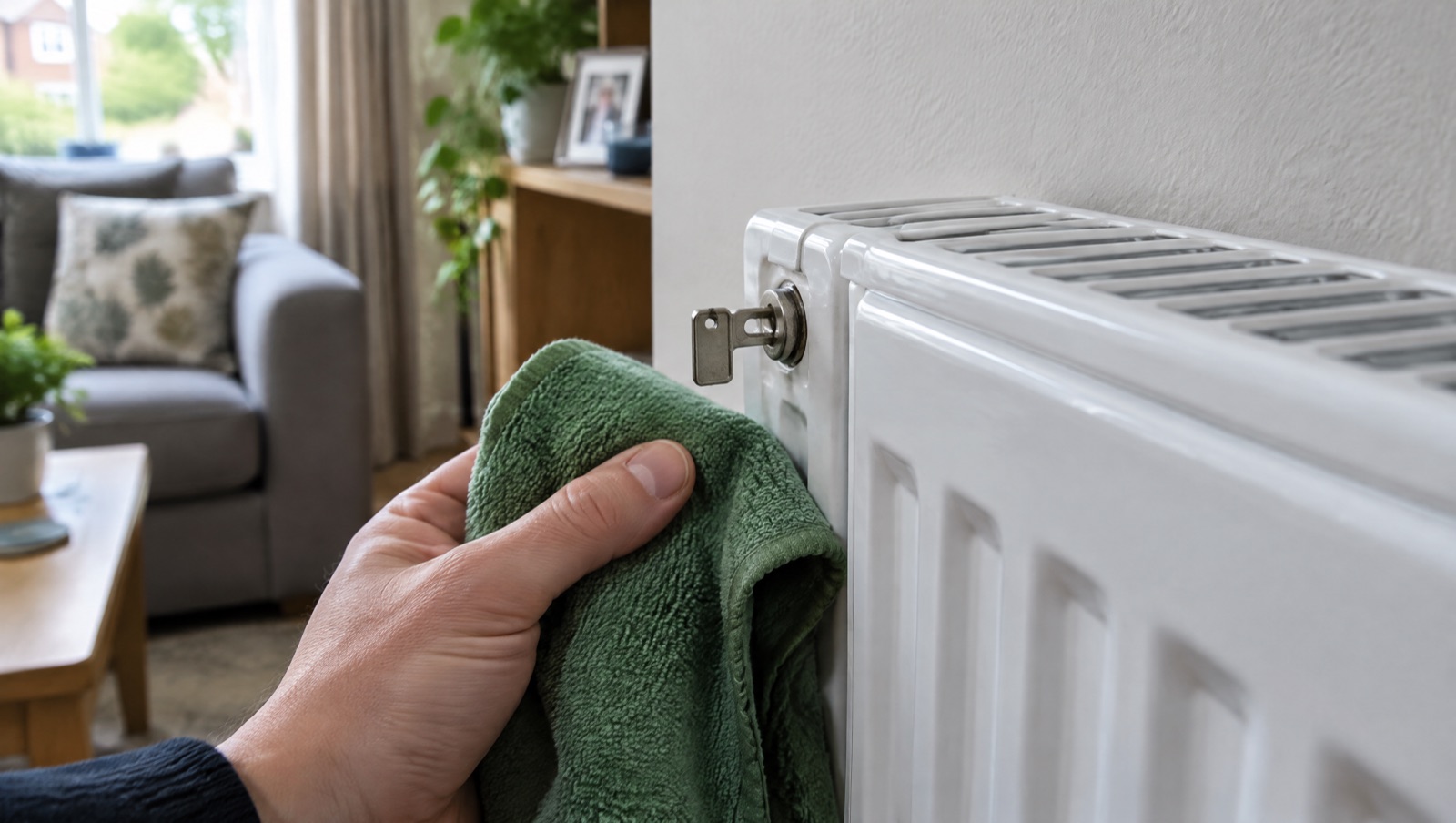
- Hold the cloth under the bleed valve, insert the key and turn it slowly anticlockwise, about a quarter to half a turn. You should hear a hiss as air escapes.
- Close the valve as soon as water appears. A steady trickle of water means the air is out. Turn the key clockwise until it's snug. Don't overtighten it.
- Repeat on each radiator that had a cold patch.
- Check the boiler pressure (see below), then turn the heating back on and feel the radiators again after half an hour.
Check your boiler pressure afterwards
Bleeding lets a little water out of a sealed (combi or system boiler) heating system, so the pressure can drop. Check the gauge on the front of the boiler. Many manufacturers suggest roughly 1 to 1.5 bar when the system is cold, but always go by your own boiler's manual.
If it's low, most boilers can be topped up using the filling loop, a small tap or lever underneath the boiler. Your manual will show you how. Only use the controls on the outside of the boiler. Never remove the boiler casing. Any work inside a gas boiler must be done by a Gas Safe registered engineer.
If you have an older open-vented system with a header tank in the loft, it refills itself and there's no pressure gauge to worry about.
Common problems
The valve won't turn
Old valves can be stiff or painted over. Don't force it, as you can snap the valve. A little penetrating oil left for a while can help. If it still won't move, it may need replacing.
No hiss and no water
The valve may be blocked with paint or debris, or the system pressure may be too low. Check the boiler gauge first.
The radiator is still cold after bleeding
If it's cold all over, check that both valves at the bottom are open. If it's cold at the bottom or in the middle, sludge is the likely cause and the radiator may need flushing.
You have to bleed the same radiator every few weeks
Air keeps getting into the system from somewhere. That's worth getting looked at by a heating engineer.
Safety tips
- Let it cool first. Water in a running system can be very hot.
- Protect carpets and walls. The water inside a heating system is often dark and can stain.
- Only open the valve a little. You're letting air out, not removing the valve. If the small screw comes right out, water will escape quickly, so close it again straight away.
- Keep children and pets away while you work.
- If you smell gas at any point, stop, open windows, don't use switches, leave the property and call the National Gas Emergency number on 0800 111 999.
How often should you bleed radiators?
There's no fixed rule. Many people check their radiators once a year, in autumn before they start using the heating regularly, and again whenever they notice cold patches or noises. It's also worth doing after any work on the heating system.
Need a hand?
Bleeding radiators is a straightforward job, but stiff valves, leaks around the valve or radiators that need taking off the wall are easier with experience. While you're getting the house ready for winter, see our guide on how to stop pipes from freezing, and read how to choose the right handyman if you're hiring for the first time.
Prefer to hand it over? Book a pro for minor home repairs on 100Handy and get those cold spots sorted.
Need a hand with this?
Book a trusted 100 Handy Pro and get it done today — no hassle, no guesswork.
Book a Pro